

Maintenance Recommendations For Electric Transfer Carts ——Rail-Guided, Trackless, And AGV Models)
In environments such as heavy-duty industrial workshops, steel structure manufacturing plants, mold warehouses, foundries, new energy production lines, and logistics centers, rail-guided electric transfer carts, trackless electric transfer carts, and automated guided vehicles (AGVs) are essential for transporting heavy loads—including steel plates, castings, tooling/molds, battery modules, and complete equipment assemblies. As high-frequency material handling equipment, these units require standardized maintenance to minimize the risk of downtime, extend service life, ensure operational safety, and maintain transport efficiency. BEFANBY has compiled the following maintenance guidelines, categorized by equipment type, for use in your daily operations.
## I. General Maintenance
1. **Daily Pre-Shift Inspection**
Verify that emergency stop switches, warning lights, and anti-collision devices are functioning correctly. Test the braking system, inspect the chassis for deformation or loose bolts, clear any debris from the unit, and strictly prohibit overloading.
2. **Battery Care**
Avoid deep discharge and overcharging. If the equipment is left idle for an extended period, perform periodic recharging. Keep battery terminals clean and free of corrosion, and ensure the charging area remains dry and well-ventilated.
3. **Electrical System Protection**
Keep electrical control enclosures sealed and dry. Regularly inspect wiring terminals and remove dust or oil buildup to prevent short circuits or poor electrical contact. In environments with high levels of dust—such as foundries or welding areas—the frequency of these inspections should be increased.
4. **Regular Lubrication**
Apply grease to bearings, gear reducers, and transmission components at scheduled intervals. Monitor for any unusual operating noises or abnormal temperature increases.
## II. Maintenance for Rail-Guided Electric Transfer Carts
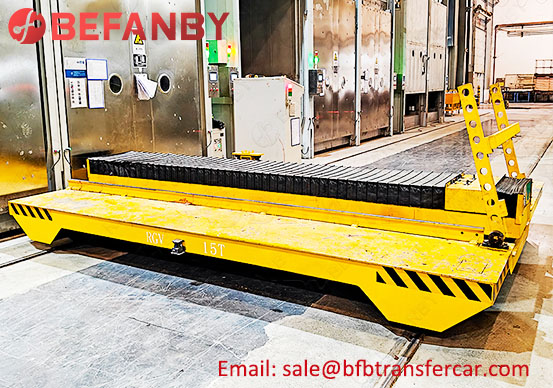
Typically used for transport along fixed routes in facilities such as steel structure plants, steel storage yards, precast component workshops, and assembly lines.
Focus maintenance efforts on the rail infrastructure and the travel mechanism. Daily tasks include clearing iron filings, welding slag, and debris from the rail surfaces, as well as checking the alignment of rail joints. Periodically inspect rail wheels and guide wheels for wear, and ensure that power-collection components maintain proper contact to prevent the cart from derailing or causing electrical arcing.
## III. Specialized Maintenance for Trackless Electric Transfer Carts
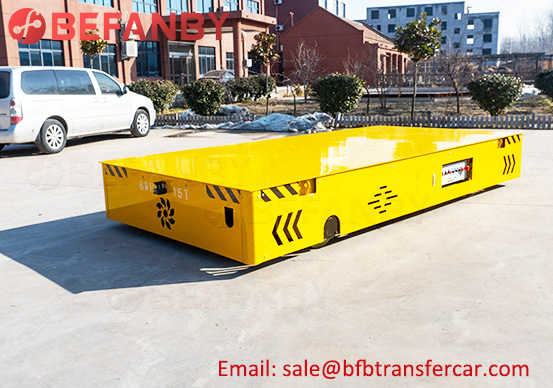
These carts operate without tracks, offering flexible routing. They are ideal for mold workshops, equipment maintenance areas, cross-facility transport, and environments where operational workflows frequently change—such as in facilities undergoing renovation.
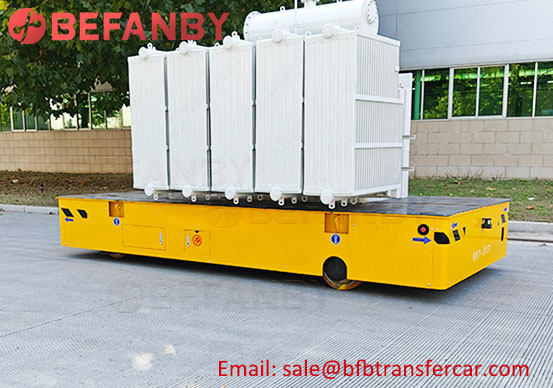
Focus primarily on the travel wheels and steering system. Regularly inspect polyurethane or rubber wheels for wear, uneven wear, or damage. Check steering hydraulic lines for leaks and verify the responsiveness of the steering system. Ensure the floor remains level to minimize impact-related damage to the wheels.
## IV. Specialized Maintenance for AGV (Automated Guided Vehicle) Transfer Carts
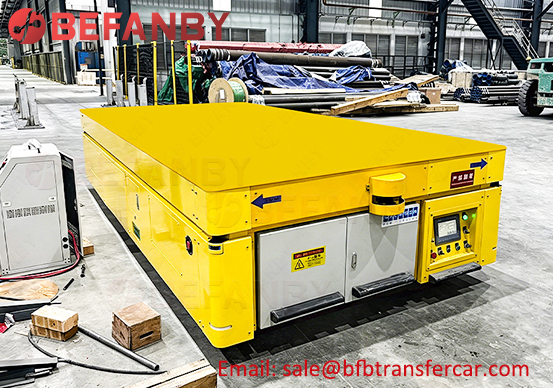
Designed for automated production lines, new energy vehicle workshops, smart warehousing, and cleanrooms, these carts integrate with production scheduling systems to enable unmanned material transport.
In addition to mechanical and battery maintenance, prioritize the upkeep of navigation and control systems. Use a soft cloth daily to clean QR code readers, LiDAR units, and sensor lenses to prevent dust from causing positioning errors. Periodically calibrate navigation accuracy and verify the stability of communication signals. Perform necessary software and scheduling system maintenance, and test the automatic charging function.
## V. Recommended Maintenance Schedule
- Daily Inspection: Quick pre-shift walkthrough by operators.
- Weekly Inspection: Clean electrical control and drive components; tighten fasteners.
- Monthly Inspection: In-depth check of batteries, wheels (tires/track wheels), and hydraulic systems.
- Quarterly/Annual Inspection: Comprehensive machine evaluation, lubricant replacement, and assessment/replacement of wear-and-tear parts.
## Conclusion
Because rail-guided transfer carts, trackless transfer carts, and AGVs differ significantly in their application scenarios and structural design, their maintenance requirements also vary. Adhering to a preventive maintenance strategy effectively reduces unexpected breakdowns and ensures a stable flow of materials throughout the workshop. BEFANBY offers custom manufacturing for various types of electric transfer carts and provides comprehensive technical support for maintenance and repairs.