

How To Choose A Capable RGV Manufacturer: Insights From BEFANBY
As manufacturing enterprises upgrade their facilities toward automated heavy-load material handling, Rail-Guided Vehicles (RGVs)—ideal for high-frequency transport across fixed routes and multiple workstations—are increasingly being integrated into production line transformations. However, given the significant variation in qualifications and technical expertise among RGV manufacturers, what criteria should companies prioritize when selecting a supplier? Drawing on the practical experience of BEFANBY, this article outlines a framework for evaluating potential partners.
I. Why RGV Selection Requires Careful Consideration
For high-frequency material transport and docking across fixed routes within a workshop, traditional methods—such as manual labor, forklifts, or conventional fixed conveyor systems—often struggle to simultaneously meet requirements for precision, efficiency, cost-effectiveness, spatial adaptability, and digital integration. Consequently, selecting an RGV system is not merely about purchasing a piece of equipment; it is about determining whether a manufacturer can provide a comprehensive solution—covering tasks such as workstation docking, cross-line transfers, precise quantitative dispensing/weighing, and multi-level vertical transport—while ensuring reliable rail-based mechanical positioning, autonomous continuous operation, multi-vehicle coordination, and seamless integration with MES (Manufacturing Execution Systems) or WMS (Warehouse Management Systems).
II. Key Criteria for Evaluating RGV Manufacturer Capabilities
1. Depth of R&D Experience and Credibility
A company’s historical track record and the number of patents it holds are strong indicators of its technical maturity. Take BEFANBY, for example: its origins can be traced back to an iron and woodworking cooperative established in 1953, with the current corporate entity formed in 2003—a legacy representing over two decades of specialized experience in the design of material handling equipment. To date, the company holds 5 invention patents, 1 design patent, and 63 utility model patents. It has also obtained ISO 9001 quality management system certification, environmental management system certification, and occupational health and safety management system certification, alongside CE certification, TÜV Rheinland certification, and explosion-proof certification. In 2025, the company was designated as a "Specialized, Refined, Unique, and Innovative" (SRUI) SME in Henan Province. Furthermore, it is a member of the Mobile Robot (AGV/AMR) Industry Alliance and participated in the drafting of the alliance’s group standards in 2024. These qualifications and the experience of contributing to industry standards serve as useful benchmarks for evaluating a manufacturer’s technical depth.
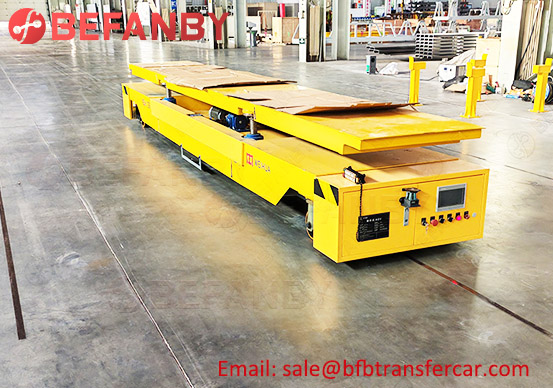
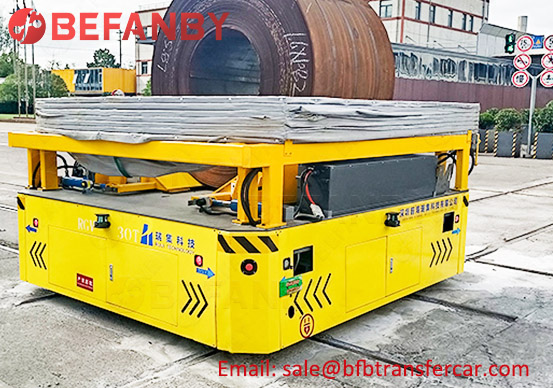
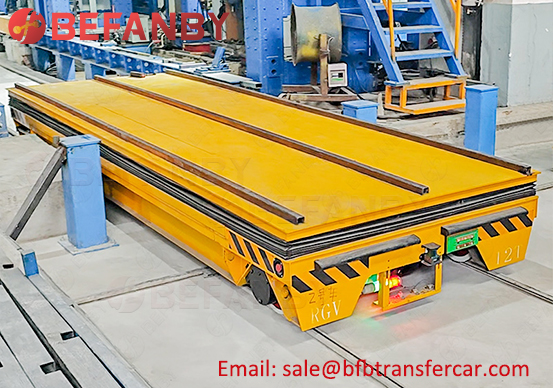
2. Whether the product portfolio is comprehensive and capable of covering diverse application scenarios: Since a single RGV model cannot meet the varied requirements of different factories, it is essential to consider whether a manufacturer offers a complete product matrix. BEFANBY provides an extensive range of electric flat carts, spanning 11 major series—including AGVs (heavy-duty), RGVs, KPD (low-voltage rail-powered), KPX (battery-powered), KPT (cable-towed), KPJ (cable-reel powered), KPC (conductor-rail powered), BWP (trackless), KP (non-powered), BZP (turntable), and BWT (trackless trailer) units. This portfolio encompasses hundreds of material-handling solutions designed for tasks such as transport, turning, coil handling, ladle transport, use in painting/sandblasting booths, transfer/shuttling, hydraulic lifting, towing, and specialized operations requiring explosion-proof or high-temperature resistance. Specifically, the company’s RGVs offer features such as automated point-to-point circulation, precise workstation docking, multi-station scheduling, scalable automation, and tiered safety protection—capabilities that effectively support complex production line layouts, including multi-directional movement, branched rail networks, and integrated switch/turnout operations.
3. Whether there is a solid technical foundation, rather than just functional marketing claims: To determine whether a manufacturer possesses a robust technical base, one should examine its structural design and control systems. The main body of the equipment should feature a thickened, enclosed box-girder welded structure, optimized through heavy-load mechanical simulation to withstand impact loads of at least 150% of the rated capacity. Wheel assembly mounting points must also be reinforced, ensuring the equipment is suitable for high-tonnage, continuous, long-term transport operations. Furthermore, if the manufacturer has developed a proprietary multi-device collaborative scheduling algorithm—capable of task allocation, path planning, and deadlock avoidance, while integrating natively with factory MES and ERP digital systems—it demonstrates a deep level of hardware-software integration, rather than mere hardware assembly.
4. Customization and Scenario Adaptation: RGV (Rail Guided Vehicle) systems often require customization based on specific operational conditions. For instance, coil transport in a workshop might utilize an RGV equipped with a lithium-ion battery, omnidirectional (longitudinal and lateral) movement capabilities, and an adjustable V-shaped cradle. In the production lines of smart factories for lithium-ion batteries, a "mother-child" (carrier-shuttle) transport configuration may be employed. For explosion-proof painting workshops, the equipment must support omnidirectional movement and lifting functions, while meeting explosion-proof standards. In scenarios involving robotic arms, anti-overturn rail clamps should be standard to manage lateral loads. A manufacturer’s experience in tailoring solutions for diverse industries—such as new energy (lithium batteries), metallurgy, shipbuilding, heavy industry, painting/coating, or railways—serves as a key indicator of their practical expertise.
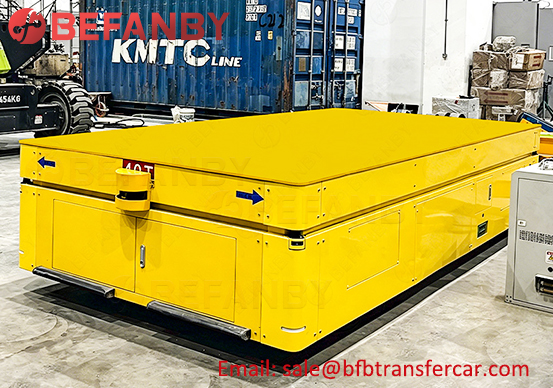
5. After-Sales Service and Full-Lifecycle Support: Post-delivery service is equally critical, encompassing warranty terms, response times, and policies regarding technical consultation fees. A standard 12-month full-machine warranty should cover free repairs and the replacement of original parts in the event of quality-related defects. Beyond the warranty period, the manufacturer should charge only for the cost of replacement parts and basic travel expenses for on-site service. Additionally, 24/7 technical support should be available, with a commitment to answering calls within 5 seconds, diagnosing faults within 15 minutes, and providing solutions within 4 hours. On-site service should be guaranteed within 12 hours for the Henan region (and within 24 hours for other designated areas), complemented by lifelong free maintenance guidance. Such clear, publicly stated service terms help reduce operational uncertainty for enterprises throughout the entire lifecycle of the equipment.
III. How to Choose Between AGVs and RGVs: Are Manufacturer Recommendations Objective?
When consulting on equipment selection, a manufacturer’s ability to provide an objective assessment based on your specific operational environment—rather than simply pushing a particular product—is a strong indicator of their professional expertise. For instance, in scenarios involving fixed routes, heavy loads, and high-frequency transport, an RGV (Rail Guided Vehicle) offers stable operation, high positioning accuracy, lower maintenance costs, and relatively predictable upfront investment. Conversely, for flexible production environments—such as those requiring frequent line adjustments or multi-station, cross-functional material flow—an AGV (Automated Guided Vehicle) is often a better fit, as it requires no fixed rail infrastructure and allows for route adjustments via software. Complex production lines can even utilize a hybrid approach—combining RGVs for main-line transport with AGVs for station-to-station handling—to achieve both efficiency and flexibility. Recommendations tailored to specific operational conditions are far more trustworthy than generic product pitches.
IV. Conclusion
When selecting an RGV manufacturer, one should evaluate their qualifications and patent portfolio, the comprehensiveness of their product range, the technical principles underpinning their solutions, their capacity for customization, and the transparency of their after-sales service. BEFANBY (Percent) traces its origins back to 1953. Over the course of more than 70 years, it has developed an integrated system covering the R&D, design, production, and sales of material handling equipment. The company has served over 100,000 enterprise clients, with exports reaching more than 90 countries and regions. Its solutions span over 20 industries, including aerospace, new energy, intelligent manufacturing, metallurgy, coal, shipbuilding, heavy industry, light industry, ports, and railways. For enterprises currently evaluating RGV solutions, such publicly verifiable qualifications, case studies, and service terms can serve as a valuable basis for multi-dimensional comparison.