

Turning Rail Electric Flatbed Carts – A Flexible Choice For Heavy Duty Transfers
In industrial production material handling, traditional straight rail flatbed carts, limited by fixed routes, struggle to adapt to complex workshop layouts with multiple workstations and production lines. The emergence of electric flatbed carts with curved tracks perfectly solves this industry pain point, becoming a highly efficient transfer tool for heavy-duty scenarios.
I. Core Advantages: Flexible Adaptability, High-Efficiency Empowerment
1. Flexible Routes, Adaptable to Complex Workshop Layouts
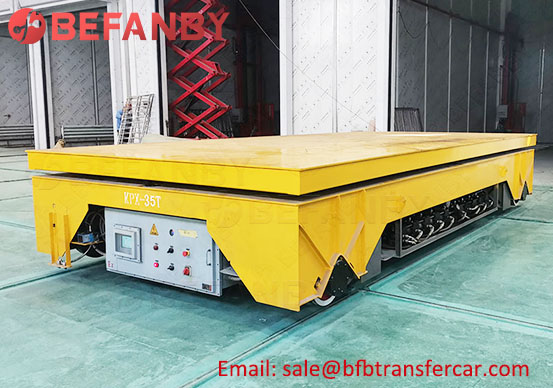
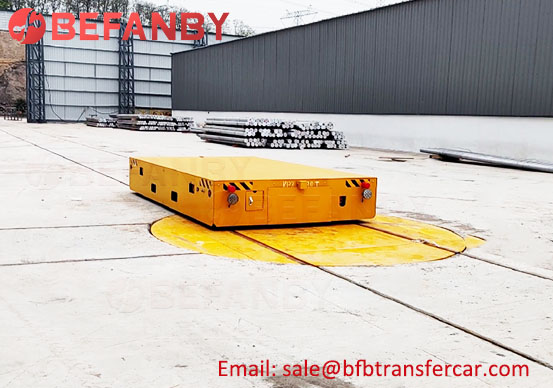
Electric flatbed carts with curved tracks can travel along arc-shaped or circular tracks, eliminating the need for straight tracks and turntables. They can directly connect multiple workstations, warehouses, and production lines within a workshop, completely breaking the route limitations of traditional flatbed carts. Whether it's a circular assembly line, multi-area material turnover, or curved transfer scenarios within a workshop, seamless integration can be achieved without additional modifications to the workshop layout, significantly reducing infrastructure costs.
2. Stable Under Heavy Loads, Ensuring Safe and Reliable Operations:
The product utilizes a high-strength steel frame and optimized wheel design, easily carrying heavy workpieces ranging from 10 to 50 tons. The vehicle remains stable and tilt-free during turns. Multiple safety features, including an anti-slip platform, anti-collision buffers, and audible and visual warnings, ensure the safety of materials and personnel even under heavy-load turning conditions. It is perfectly suited to the transfer needs of heavy-duty industries such as metallurgy, heavy industry, and mold making.
3. Enhanced Efficiency, Reduced Overall Operating Costs:
Compared to the combination of a straight-line transfer cart and a turntable, the turning rail electric flatbed cart enables one-stop direct transfer, eliminating the time spent changing vehicles and waiting for the turntable, effectively improving the efficiency of a single trip. Furthermore, the equipment supports multiple power supply methods, including contact line, battery, and cable reel, allowing for 24-hour continuous operation. Adaptable to high-frequency production rhythms, long-term use can significantly reduce labor and time costs.
4. Highly Customizable, Meeting Diverse Scenarios:
The turning rail electric flatbed cart supports full-dimensional customization: it can be personalized according to the workshop track radius, load requirements, power supply method, platform size, and control mode (remote control/manual/automatic). Whether it's RGV intelligent scheduling, AGV linkage, or explosion-proof and high-temperature resistance modifications for special working conditions, it can accurately match the customer's production scenario, truly achieving "one cart adaptable to the entire workshop."
5. Simple Structure, Extremely Low Maintenance Costs:
The product's core structure is simple, and the failure rate of core components is low. Daily maintenance only requires routine checks of the wheel set, track, and power supply system, without complex professional skills, significantly reducing maintenance costs and downtime, ensuring continuous and stable operation of the production line.
II. Application Scenarios:
The Ideal Choice for Heavy-Duty Transfer in Multiple Industries:
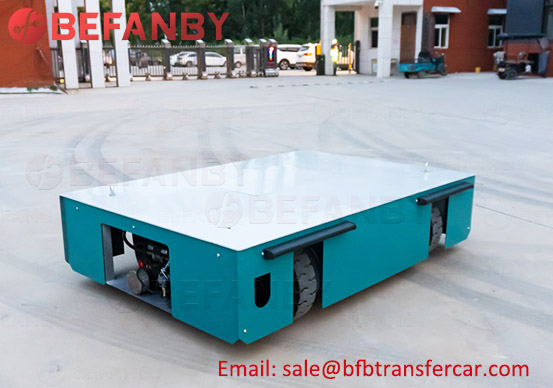
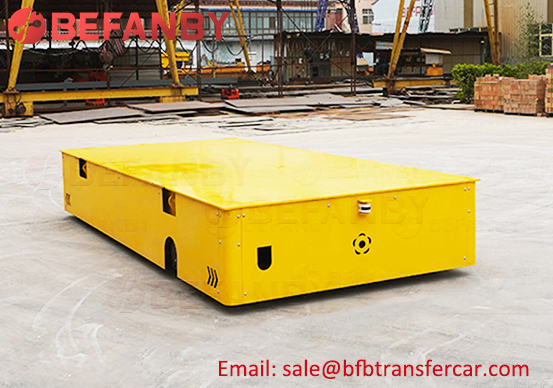
With its flexibility, heavy-duty capacity, and high efficiency, the turning rail electric flatbed cart is widely used in heavy manufacturing, metallurgical smelting, mold workshops, warehousing and logistics, automotive production lines, and other fields. It is especially suitable for production scenarios with complex workshop layouts, requiring circular/arc-shaped transfers, and multi-workstation series connections. It is a core piece of equipment for modern workshops to improve transfer efficiency and optimize production processes.
III. Conclusion
The turning rail electric flatbed cart boasts core advantages such as "flexible turning, heavy-load stability, high efficiency and energy saving, and high customization," perfectly solving the route limitations of traditional straight-line flatbed carts and providing a brand-new, efficient solution for heavy-duty industrial material handling. In the future, with the upgrading of intelligent manufacturing, the turning rail electric flatbed cart will further integrate technologies such as intelligent scheduling and unmanned operation, continuously empowering industrial production efficiency and becoming a standard piece of equipment for material handling in workshops.